
LinkedIn Algorithm Explained: 5 Ways to Win in 2026
Martyn SnibsonSocial Media3 hours ago19 Views

For marketing professionals and business owners seeking to grow their online presence, LinkedIn’s algorithm has often drawn criticism for content that can feel “cringey” or excessively performative.
 
Previously, LinkedIn’s algorithm was heavily weighted towards maximising reach.
 
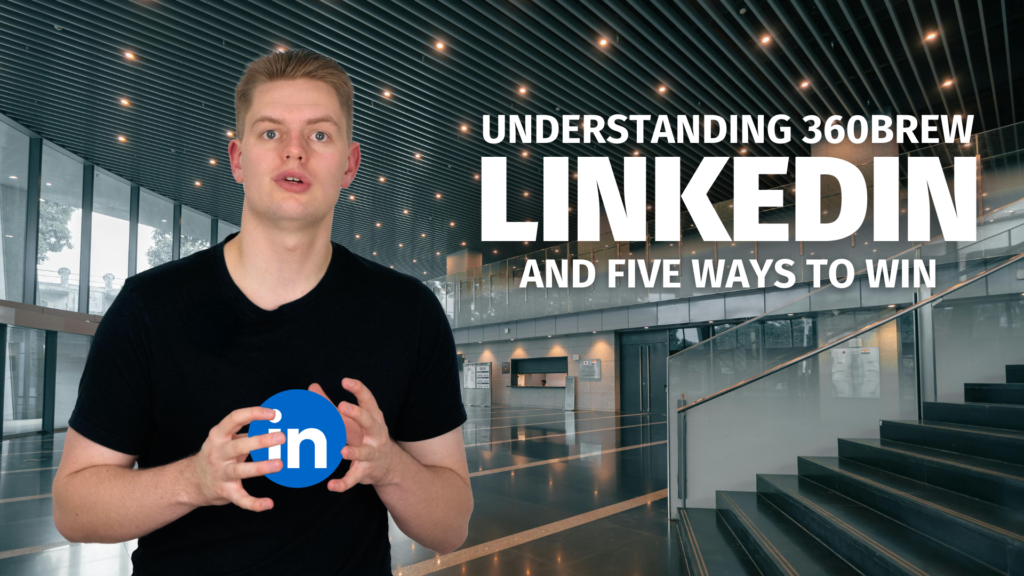
As a result, LinkedIn has been rolling out updates that focus on content quality and the calibre of engagement through its 360Brew AI algorithmic system. This marks a transition in how content is delivered to audiences, prioritising substance above mere reach or network size.
 
Previously, you could somewhat game the algorithm to maximise reach, and a “like” was one way to do so.
 
In my experience distributing content for a client, if we posted a case study and the company we’d worked with – who had 100k followers – liked our content, we’d often see a 23–35% increase in organic impressions that month compared to a baseline month. That’s not to say a like from a high-follower profile doesn’t still boost your post impressions, but the effect isn’t what it once was, particularly when it comes to gaining new followers.
 
In addition, many tried to game the algorithm through ‘connectionmaxxing’ and paying for access to closed groups, where entire groups would be notified when someone posted and encouraged them to engage.
 
This created confusion for marketers and business owners alike: seeing “AI slop” content rack up hundreds of likes and comments made it look like that was what audiences actually wanted. That’s part of why LinkedIn is shifting to be more like Instagram and TikTok, where genuinely good content is what performs.

Mastering LinkedIn Hooks

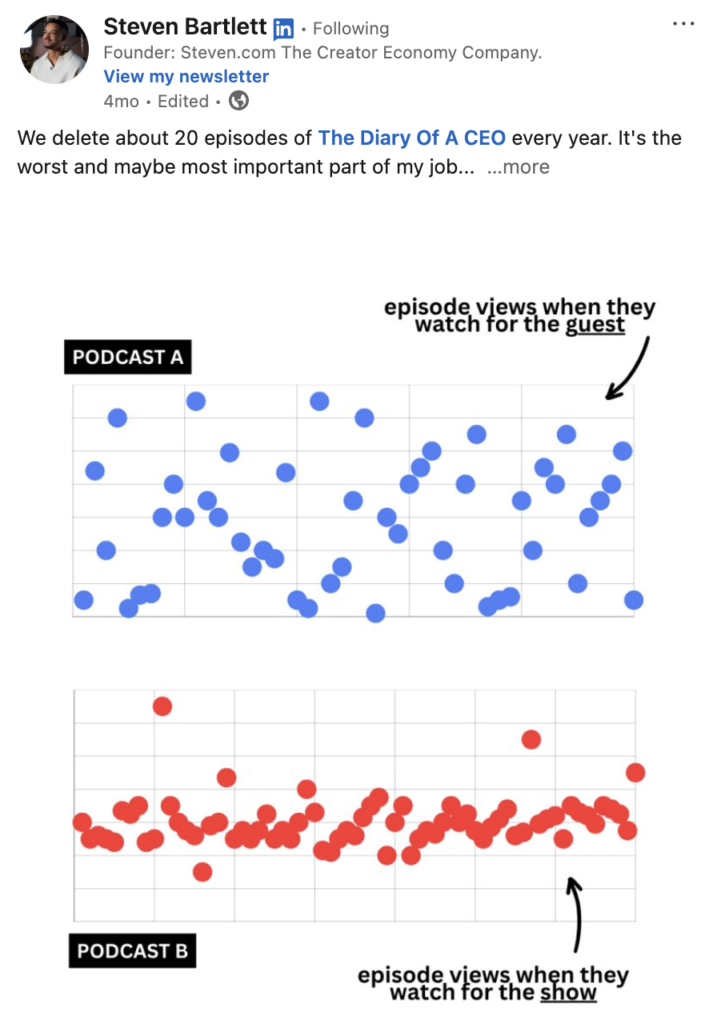
Similar to how ‘watch time’ helps platforms like YouTube, Instagram, and TikTok decide whether to distribute content more widely, LinkedIn’s 360 Brew algorithm works much the same way but is based on ‘dwell time’. Dwell time refers to whether the audience actually stops scrolling to read your content.
This is why hooks are critical to post performance. As Diandra Escobar puts it: “If the words [in your hook] don’t pull people in, nothing else matters – no one will see the rest.”
A good hook should:
  • Stick to roughly a 140-character text budget (or about 110 pixel units per line), so your message is fully visible on mobile before the “see more” button cuts it off.
  • Clearly establish stakes or tension in the first 1–3 sentences. Enough context to create intrigue without offering any resolution so the reader thinks, “What’s in it for me?”
  • Build in psychological curiosity, delivering on what the post promises without overselling or misleading the reader.
LinkedIn Hooks

Examples of Good LinkedIn Hooks

While writing this article, I researched hooks that genuinely sparked my own curiosity. In just 10 minutes of digging, I found the following:
 
Founder, Tech Industry:
 

“If you’re sick of hitting the Claude token limits, here’s 5 things I do to get way more usage of it lol”

 
Reasoning: “Hitting the Claude token limits” taps into a common frustration within the tech industry, while “here’s 5 things” offers a concrete solution, giving readers a clear reason to keep reading.
 
Business Developer, HR Industry:


“I know some people reading this might’ve had the worst week of their life. Well, I’m here to remind you that if you were trying, you weren’t failing.”


Reasoning: “I know… worst week of their life” builds relatable empathy and emotional disruption, while “if you were trying, you weren’t failing” validates that struggle and offers an uplifting mindset shift.
 
B2B Civic Outdoor Advertiser:


“This 3-minute video we made broke every record in Shark Tank ABC history. And all it comes down to one thing…”


Reasoning: The hook uses a visual pattern interrupt, prompting the reader to look closer and dig for context – creating curiosity that can only be resolved by watching the video.
 

The Rise of the LinkedIn Influencer

Marketers and business owners/founders alike are turning to LinkedIn not only to seek jobs or find potential job candidates, but also to elevate both themselves and the company they work for beyond the company-branded page. They use the platform to highlight expertise and connect on a more personal level. Influencers at both the founder and employee levels are using the space to deliver structured business content, videos, and personal narratives to reach massive, highly engaged audiences. Consumers increasingly trust people before institutions. They seek signals of expertise, cultural relevance, transparency, and human presence before making purchasing decisions.
 
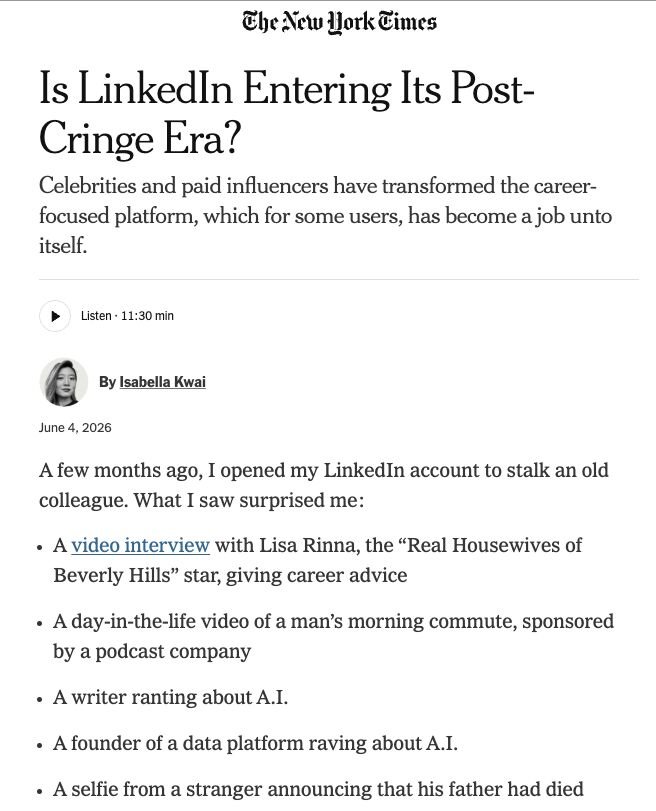
LinkedIn influencing has also become a genuine career path. Celebrities, executive coaches, and high-profile creators have flooded the platform, treating it as an entertainment hub for white-collar professionals and using it to deliver structured business content, videos, and personal storytelling to build large, engaged followings.

Experience Beats Variety

LinkedIn now places a greater emphasis on account credentials to verify whether you have a genuine background or history in the relevant topics being discussed. “The algorithm evaluates the author’s authority and expertise on the topic they’re posting about”, Alice Xiong (Director of Product Management) (Via Top Dog Social Media).
 
When building out a personal brand – whether as a marketer, founder, or on behalf of your business – it’s worth sticking to a consistent set of topics tied to your area of expertise.​
 
For example, a marketing professional who’s left a stable agency job to go freelance might focus on:
  • Marketing and industry insights;
  • The journey of going freelance and lessons learned;
  • The risks of leaving stable work for freelancing;
  • Case studies; and
  • Honest opinions.
The objective is to share your experience and expertise that helps other professionals – providing content that gives genuine value to help businesses and individuals improve their lives.​

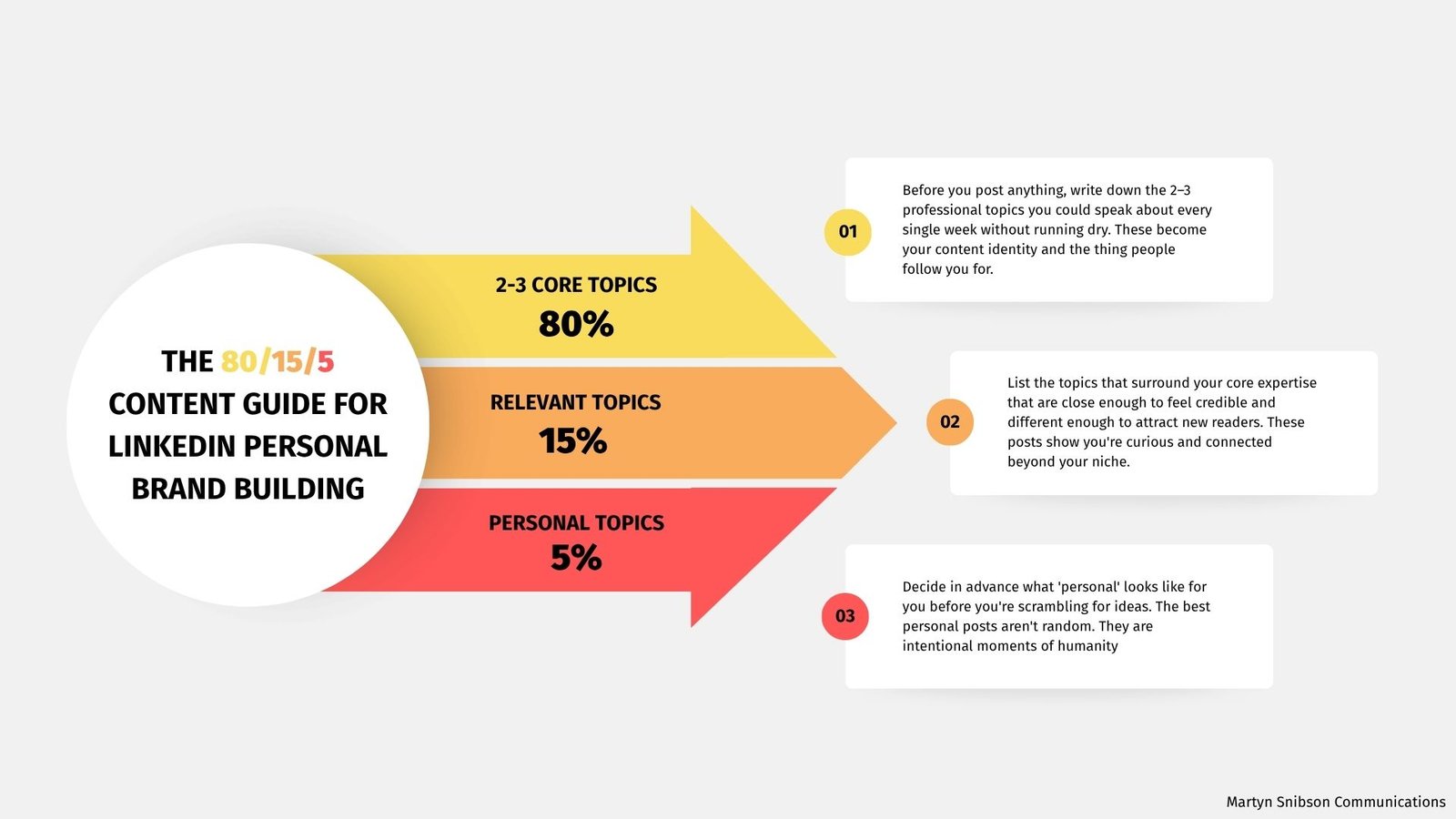
80/15/5 Rule

80/15/5 Rule - LinkedIn Content Ideas Guide
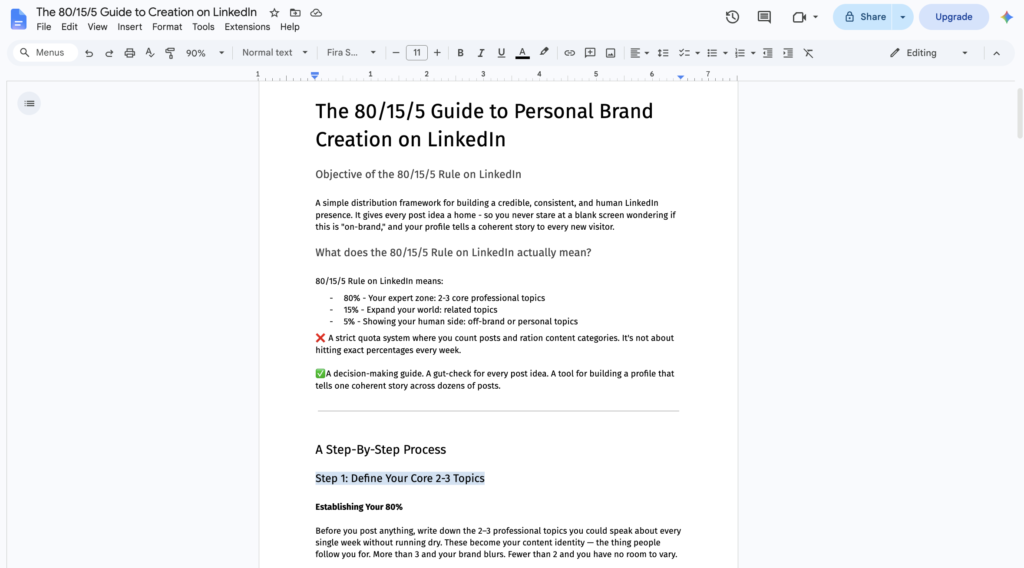
When deciding what to post, particularly if you are trying to build a personal brand on LinkedIn, consider the 80/15/5 content distribution rule as a guide:
80% – your 2-3 core professional topics
15% – Related topics
5% – Off-brand or personal topics

You can either click this link for a Completely FREE Guide to Creating LinkedIn Content that is ready for you to use on Google Docs.

LinkedIn Posts Last Longer

If a LinkedIn post doesn’t perform in the first hour, that isn’t the be-all and end-all. In fact, rather than treating your LinkedIn content as either a success or a flop in the first hour, posts can continue finding new audiences over days or even weeks, as long as people keep engaging with them meaningfully.
If you’re using imagery, make sure your ALT text is filled in and genuinely relevant to the image. This matters for SEO, both on Google, Bing and AI search.

LinkedIn and AI Models Love Original Content

There’s no doubt that the influx of AI-generated content has flooded the platform, leaving a lot of material that is either recycled, AI-generated, or impersonal. In fact, according to Tech Radar, over half of all long-form LinkedIn posts are AI-generated.
That’s not to say it’s always the wrong approach. Using an existing viral post as a starting point, borrowing its structure or format and reshaping it to suit your audience and situation can be a useful way to unpack an idea.
But personal experiences and insights that are fresh and unique to you do more than strengthen your personal brand – they build the trust your audience has in you.

Final Word

LinkedIn’s 360 Brew update focuses on delivering high-quality content that users are genuinely interested in, which, in turn, drives more ad revenue for the platform.
 
Understanding and harnessing these algorithmic changes is essential, especially given that LinkedIn is the social platform professionals actually use during their working day. That’s an opportunity worth taking advantage of.

Categories

Join Us
  • Facebook
  • LinkedIn
  • YouTube
  • Instagram
  • TikTok

Advertisement

Loading Next Post...
Follow
Search Trending
Loading

Signing-in 3 seconds...

Signing-up 3 seconds...